
Bay vs. Bow Windows: What's the Difference?
How bay and bow windows differ in shape, cost, and the rooms they suit best.
Bay and bow windows are both projecting styles that extend outward from the home's exterior wall, and they're often confused for each other — but the difference is meaningful once you're comparing quotes.
Bay windows
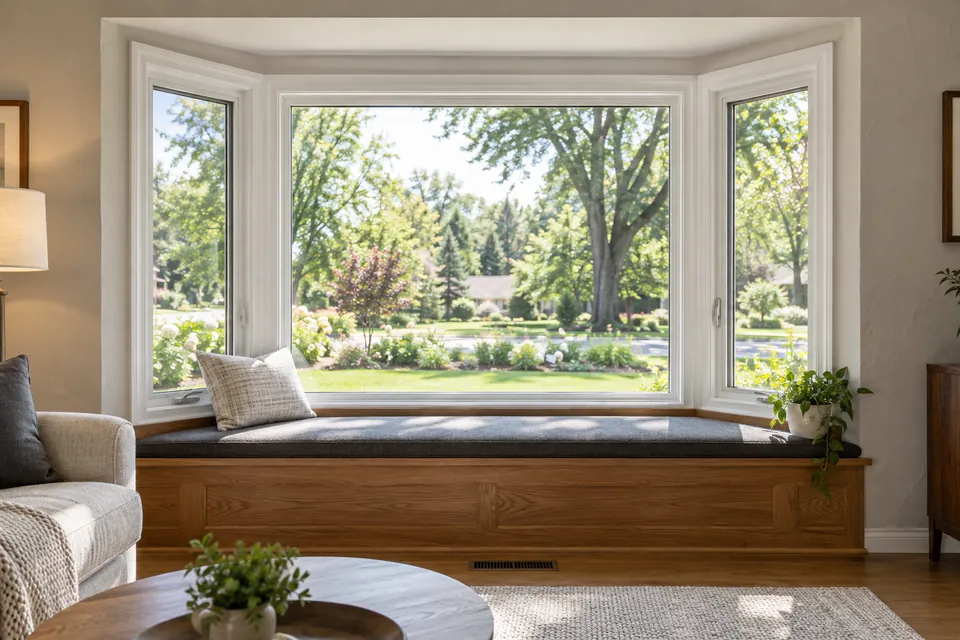
Use three windows — a large center picture window flanked by two smaller angled windows, commonly at 30 or 45-degree angles. The sharper angles create a more defined alcove, often used for a window seat.
Bow windows
Use four to six windows joined at gentler angles, forming a smooth, gradual curve rather than the bay's sharper geometry. More individual panes generally mean more operable sections and a softer, more panoramic overall shape.
Cost and structure
Bow windows are typically the more expensive of the two, given the greater number of units and generally larger overall size. Both require structural support brackets for the projection and careful roofing/overhang detailing to prevent water intrusion — this isn't a simple swap-in project like a standard window replacement.
See our full guides on bay windows and bow windows for the complete pros and cons of each.
One more thing homeowners ask.
Related guides.
 Window Styles
Best Replacement Window Styles for Different Rooms
Window StylesCasement vs. Double-Hung Windows
Getting StartedWhen Should You Replace Your Windows?
Getting Started10 Signs Your Windows May Need to Be Replaced
Service and design images are illustrative; they do not represent documented local projects.
Ready to get a free estimate?
Two minutes, no obligation, no showroom visit required.