
What actually makes a window energy efficient — explained without the sales pitch.
Four factors determine real-world performance. Here's what each one means for an Indianapolis home.
Indiana's climate is demanding on windows — humid summers that push cooling loads up, and cold winters where heat loss through poorly performing glass adds up fast. "Energy efficient" gets used as a marketing phrase a lot, so it's worth understanding what the term actually measures.
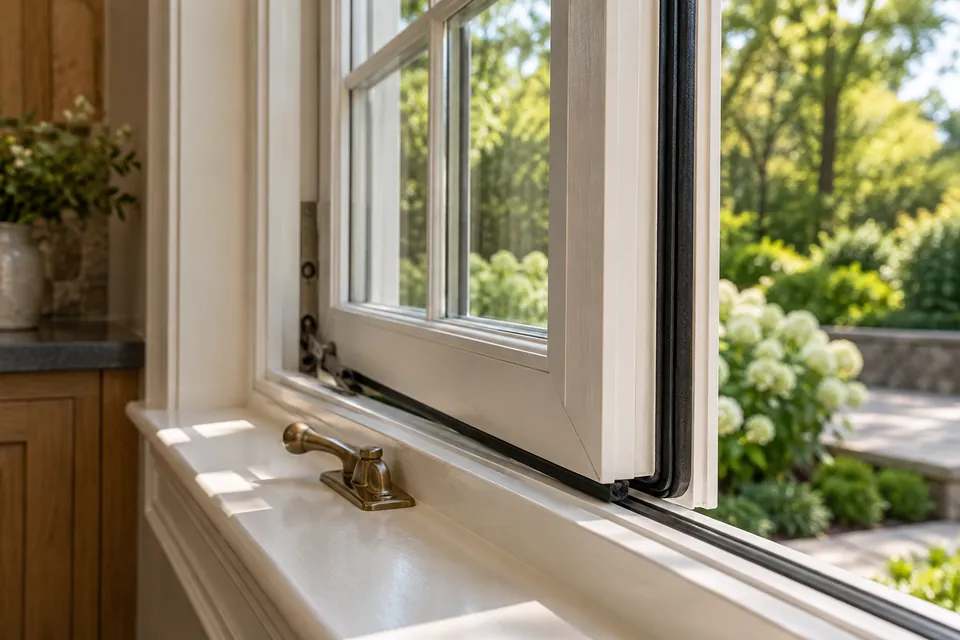
The four factors that matter
1. Glazing (pane count)
Double-pane is standard for most Indianapolis replacement projects — two glass layers with an insulating gas-filled gap. Triple-pane adds a third layer and improves insulation further, at a higher cost. See our comparison below for when triple-pane is worth the upgrade.
2. Low-E coatings
Low-emissivity coatings are a microscopically thin, transparent metallic layer applied to the glass that reflects infrared heat while letting visible light through. In practice, that means summer heat is reflected away and winter interior heat is reflected back in, without noticeably darkening the room.
3. Gas fill
The gap between panes is typically filled with argon or krypton gas rather than plain air — both conduct heat less efficiently than air, adding another layer of insulation. Krypton performs slightly better but costs more and is usually reserved for narrow gap, higher-performance units.
4. Frame material and construction
The frame matters as much as the glass. A well-insulated vinyl or fiberglass frame with tight, properly sealed construction can outperform a poorly built frame paired with premium glass. See our replacement windows page for a frame material comparison.
Match the quoted glass package to the label with our NFRC label worksheet.
U-factor and SHGC, explained plainly.
U-factor measures the rate of heat transfer through the whole window (glass + frame) — lower numbers mean less heat escapes in winter. Older single-pane windows are often above 1.0; a well-rated modern replacement typically falls between 0.20 and 0.30.
Solar Heat Gain Coefficient (SHGC) measures how much solar heat passes through the glass — lower numbers mean less heat gain. For Indiana's hot, humid summers, a moderate-to-low SHGC on south- and west-facing windows helps control cooling costs, though very low SHGC can also reduce helpful winter solar warming on those same faces. Ask your installer about orientation-specific glass packages if this matters to you.
When the upgrade is worth it.
| Double-pane Low-E | Triple-pane Low-E | |
|---|---|---|
| Typical U-factor | 0.22–0.32 | 0.15–0.22 |
| Sound dampening | Good | Better |
| Relative cost | Baseline | Higher (varies by manufacturer) |
| Best fit | Most Indianapolis homes | North-facing rooms, busy streets, long-term holds |
Details to discuss for your window project
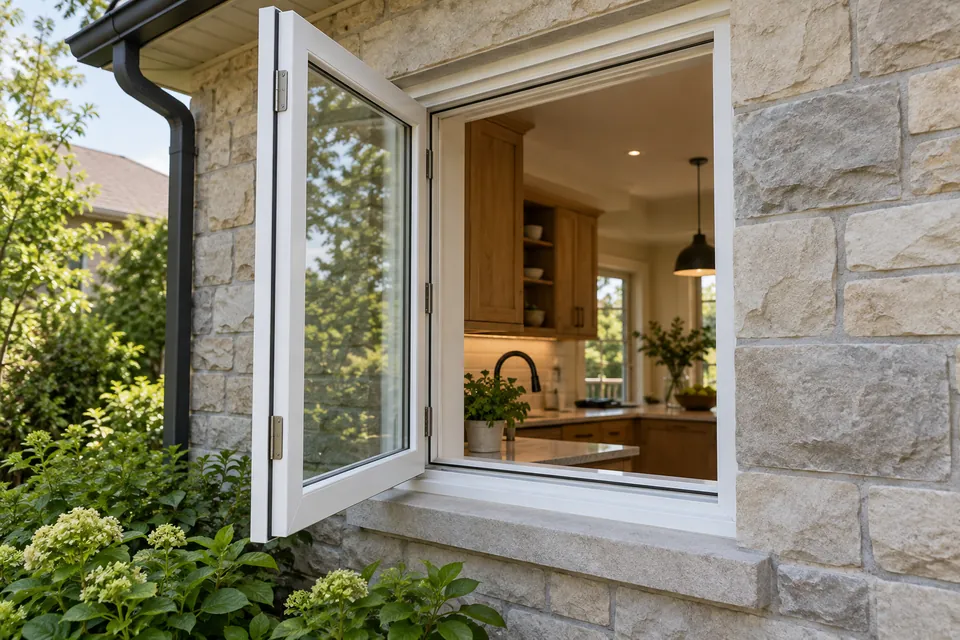
Use these illustrative views to describe the opening, finish, and operating details you want included in your estimate.

Energy-efficiency questions.
Want the right glass package for your home's exposure?
We'll connect you with a local installer who can recommend a package based on your home's orientation and goals.