What Causes Window Condensation?
The difference between normal interior condensation and a sign your windows are underperforming.
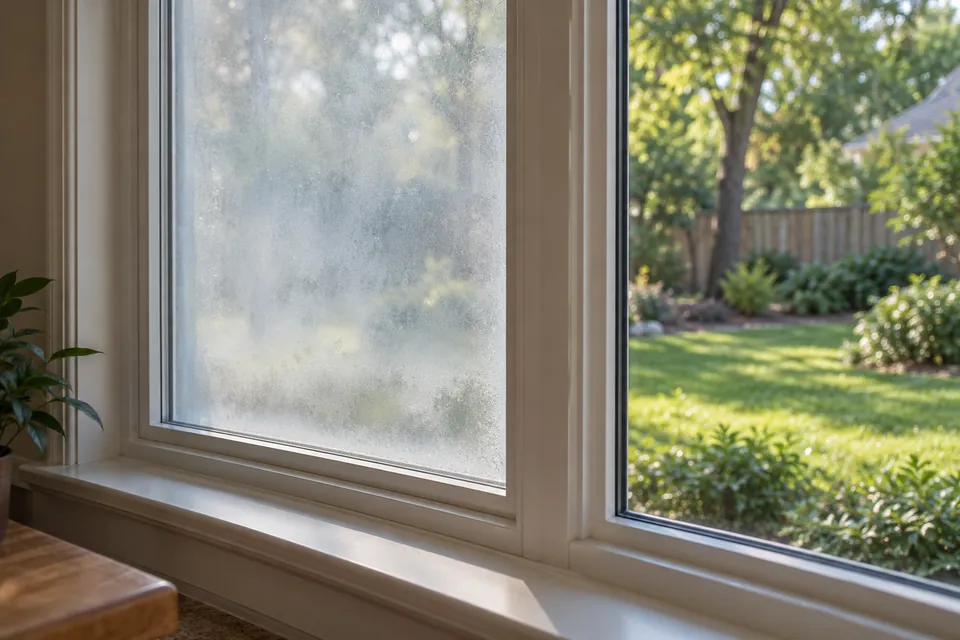
Condensation on the interior of your window glass happens when warm, humid indoor air meets a cold glass surface — the glass temperature drops below the air's dew point, and moisture condenses out, the same physics as a cold glass of water sweating on a summer day.
When it's normal
Some interior condensation during very cold weather, especially in rooms with higher humidity (bathrooms, kitchens, near indoor plants), is normal even with quality windows — it reflects your indoor humidity level more than a window defect.
When it signals a problem
Frequent or heavy condensation, especially on newer or supposedly efficient windows, can mean the glass's insulating performance isn't adequate for your indoor humidity level — either an underperforming U-factor for your climate, or (if it's between the panes rather than on the interior surface) a failed seal.
What you can control
Reducing indoor humidity (ventilation fans in bathrooms and kitchens, a dehumidifier in damp basements) reduces interior condensation regardless of window quality. If condensation persists on newer windows even with reasonable humidity control, that's worth discussing with an installer.
One more thing homeowners ask.
Related guides.
TroubleshootingWhy Are My Windows Foggy Between the Panes?
 Troubleshooting
Why Do I Feel Drafts Around My Windows?
 Troubleshooting
Why Are My Windows Hard to Open or Close?
Getting StartedWhen Should You Replace Your Windows?
Service and design images are illustrative; they do not represent documented local projects.
Ready to get a free estimate?
Two minutes, no obligation, no showroom visit required.