
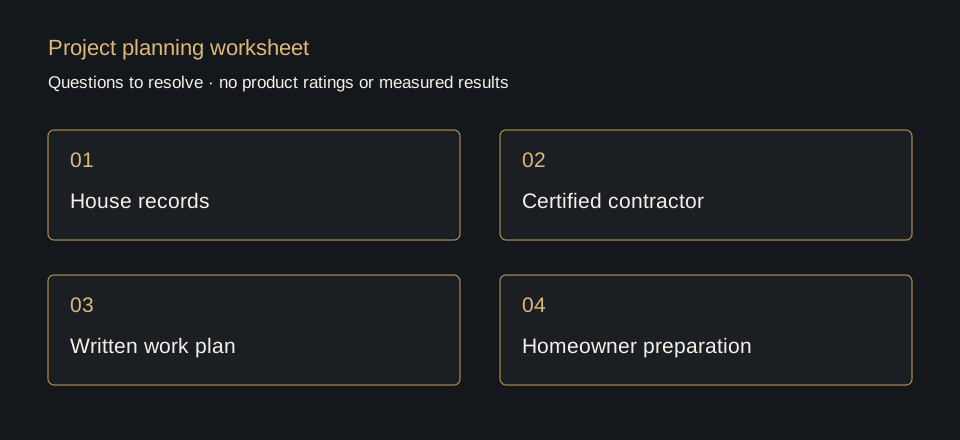
Window replacement in a pre-1978 Indianapolis home needs a lead-safe planning conversation before work begins. Do not start by sanding a stuck sash or removing painted trim. Start with the house records, the openings you want assessed, and a contractor who can explain the requirements applicable to the project.
EPA's consumer guidance explains that older housing may contain lead-based paint and that window work can create hazardous dust. It recommends hiring a lead-safe certified contractor. We do not inspect paint, verify individual contractors' certification through this guide, or determine the rules for your address.
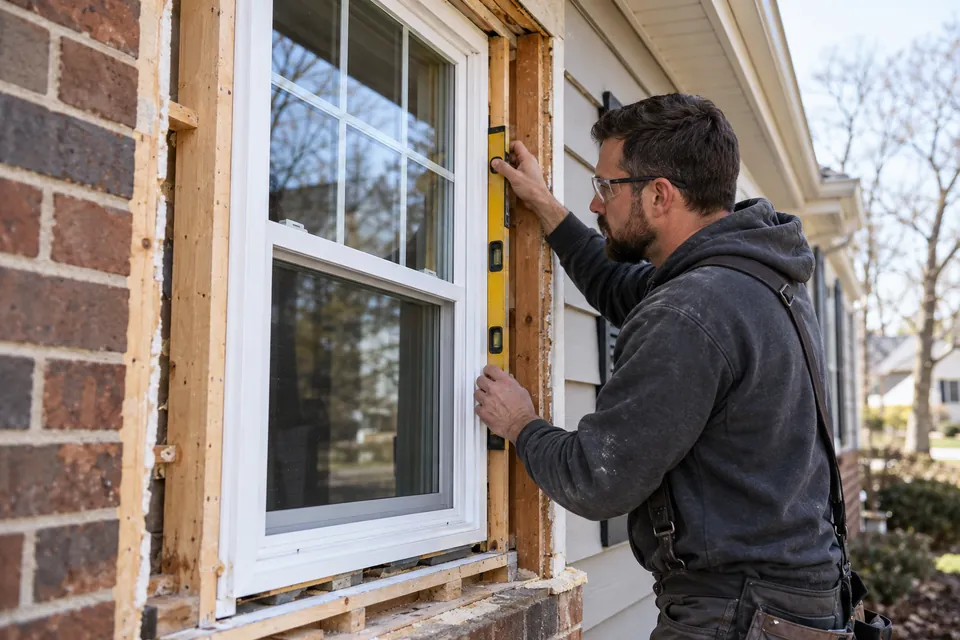
Gather what you already know
Bring the home's construction date and any prior lead inspection or testing records. If you do not have a record, say so. A newer window does not answer every question about surrounding painted trim or other surfaces the work may disturb.
List the rooms and symptoms without opening up the construction yourself. Note where a window sticks, where glass is fogged, and what trim you hope to preserve. Photos taken without disturbing materials can help you explain the project. Ask the contractor how they want to assess the openings.
What should you ask the contractor?
- What certification applies to your firm for this work, and how can I verify it?
- Who will explain the painted surfaces affected by the proposed scope?
- What records or assessment are needed before choosing the installation method?
- What written preparation instructions will you give our household?
EPA provides a contractor program reference. Use current official information to verify the relevant certification rather than accepting a general “licensed and insured” sales statement as the answer to a lead-safe question.
Indy Windows & Doors is an estimate-matching platform. An introduction to a professional does not replace your verification of their qualifications or the project-specific discussion. Ask for the business name and documents directly.
Separate paint planning from frame selection
Ask which materials would be disturbed by insert replacement and by full-frame work. An insert retains the existing frame; that does not mean the contractor can skip assessing painted components affected by the work. Full-frame scope should describe the removal, any repair, and the finish work afterward.
Use our insert vs. full-frame comparison to record the recommendation for each opening. The age of the house alone does not establish the condition of every frame. Ask what was observed and how that observation supports the recommendation.
What belongs in the written project plan?
| Planning item | Ask the contractor to clarify |
|---|---|
| Affected openings and surfaces | Which window, trim, and surrounding components are included? |
| Assessment and records | What information supports the plan and who keeps it? |
| Work area | Which rooms or outside areas will be restricted? |
| Household preparation | What should occupants move or arrange before arrival? |
| Completion | How will the contractor document the work and explain when areas can be used? |
These are planning questions. This page is not a set of DIY containment, removal, cleanup, or testing instructions. Ask the responsible contractor for instructions appropriate to the actual project and household.
Plan around the people using the rooms
Tell the contractor if children, pets, or other occupants use the work area, and describe your access needs. Ask when rooms may be unavailable, how work will be separated from occupied space, and what arrangements you should make. Obtain the answer before scheduling rather than improvising after the crew arrives.
If you work from home, identify the room you need to use and ask whether the proposed sequence is compatible with that use. If the answer is uncertain, resolve the uncertainty before accepting the schedule. This is practical household planning, not a guarantee that remaining in the home will be appropriate.
Does a historic designation change the decision?
Verify any historic designation, neighborhood restriction, or approval requirement with the responsible local authority for the property. Do this before ordering a window whose appearance or materials may require approval. We have not established whether your Indianapolis address has such a requirement.
Keep design approvals separate from lead-safe planning and from the installation recommendation. A product that fits one requirement does not automatically settle the other questions. Give the contractor any written approval or design constraints you receive.
Compare quotes on the same documented scope
Use our quote checklist to record removal, frame repair, finishes, disposal, and the project planning the contractor includes. Ask how unexpected conditions are documented and approved. Do not compare a bid with clearly described older-home work to a bid that leaves that work undefined.
For a starting point, visit the Indianapolis project guide or request a local estimate. State that the home was built before 1978 and ask the professional to discuss the appropriate lead-safe process before the appointment. EPA's current lead-safe renovation pamphlet provides further official background.
Save the planning worksheet
Bring: house age; existing inspection/testing records; opening list; visible symptoms; desired trim; historic/design constraints. Ask: firm certification and verification; affected painted surfaces; assessment; method per opening; work-area restrictions; household instructions; completion records; unexpected conditions. Do not disturb surfaces to complete this checklist.
Sources and editorial note
Prepared by Indy Windows & Doors using the references above. This is an editorial planning guide, not a report of an installation we performed. Product documents, contractor advice, and property-specific requirements determine the final decision.