
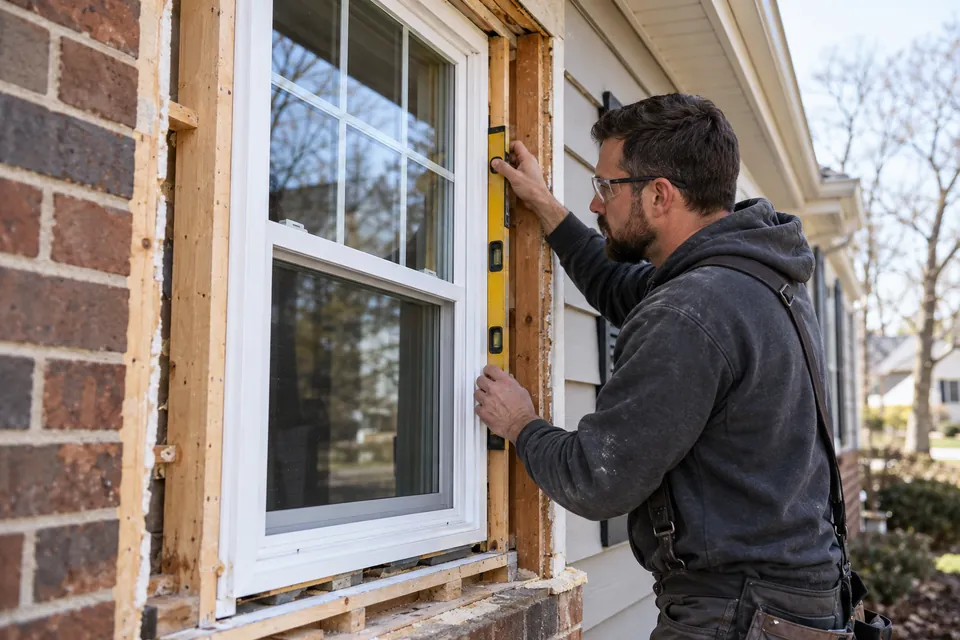
Insert vs. full-frame window replacement is a decision about what stays in the opening. An insert fits inside the retained frame. Full-frame work removes the existing unit and frame so the opening can be addressed. For an Indianapolis project, compare those scopes before comparing prices or glass upgrades.
Andersen's insert replacement guidance identifies a square frame without rot as a starting point, with existing trim and siding retained. Its full-frame guidance describes the alternative. These are manufacturer references, not proof that a particular method suits your house or that a matched installer sells Andersen products.
What changes with each installation method?
| Decision | Insert replacement | Full-frame replacement |
|---|---|---|
| Existing frame | Retained; its condition must support the new unit | Removed as part of the quoted scope |
| Trim and finish | Ask which existing parts remain and what needs touch-up | Ask who restores the interior and exterior finish |
| Visible glass | Request dimensions of the proposed unit within the retained frame | Request dimensions for the complete proposed assembly |
| Hidden conditions | Ask what can be assessed before work and what cannot | Ask how newly exposed damage will be documented and priced |
A quote that says only “replace bedroom window” leaves these decisions open. Ask the contractor to name the installation method for each opening. The method may differ from room to room; one damaged opening does not establish the scope for every window in the house.
What should the installer inspect?
Bring the installer to the opening rather than making the decision from a showroom sample. Ask them to point out the condition of the frame, whether it is square, signs of moisture, and the connection to the surrounding wall. If a stain appears below the sill, ask how they will investigate its source before covering it with a new unit.
You can record visible symptoms without removing painted trim or probing concealed materials. Write “bedroom: sash sticks at the bottom” instead of diagnosing rot. In a pre-1978 home, read our older-home planning checklist before disturbing painted surfaces.
Will an insert change the amount of glass?
Ask for a drawing showing the visible glass dimensions after installation. The useful comparison is the proposed assembly in your opening, including any retained frame. A catalog photo of a larger display window will not answer that question.
For example, imagine two quotes for the same kitchen opening. One retains the old frame and proposes an insert; the other replaces the whole frame. Request drawings for both. Compare visible glass, where the new interior trim will land, and whether either option changes how the window operates. This is a planning example, not an observed local project.
What belongs in the written quote?
- Name each opening. Use room names and a simple numbering system so the quote matches your list.
- Describe removal and retention. Specify the frame, trim, sill, and exterior finish that remain or are replaced.
- Identify the exact product. Include manufacturer, series, operating style, and glass package.
- Describe finishing and unexpected repairs. State who handles touch-up, disposal, hidden damage, and approval of additional work.
Do not compare a complete full-frame bid with an insert bid as though both cover the same labor. Read the quote comparison guide, then ask both contractors to explain the scope difference in writing. There is no verified local percentage premium that can replace that comparison.
Questions to take to the appointment
- What specifically makes this frame suitable or unsuitable for an insert?
- What visible glass dimensions will remain?
- How will the opening be weather-managed according to the selected product's installation instructions?
- If you uncover damage, what is the approval process before additional work begins?
Keep the answers with the quote. If two installers recommend different methods, ask each to explain the condition they observed. “We always do it this way” is less useful than a recommendation tied to your opening.
Prepare your Indianapolis estimate request
List the openings, symptoms, and whether keeping the existing trim matters to you. Our window replacement service guide explains the wider project. To start matching, request an estimate from a local professional and include that list. Indy Windows & Doors does not determine the installation method or perform the work.
Save the planning worksheet
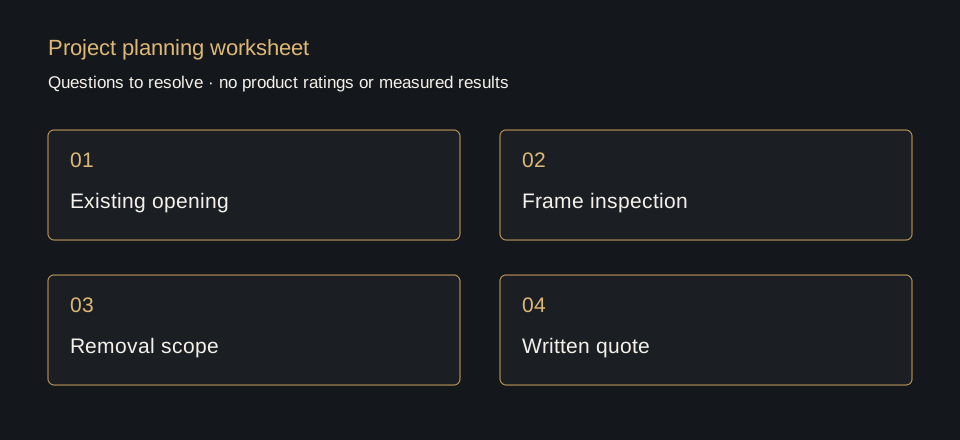
For each opening: room/name; visible symptom; frame condition verified by installer; insert/full-frame recommendation and reason; proposed glass dimensions; retained trim; exterior finish; exact product/glass; hidden-damage approval; disposal; finishing; product warranty; installation warranty.
Sources and editorial note
Prepared by Indy Windows & Doors using the references above. This is an editorial planning guide, not a report of an installation we performed. Product documents, contractor advice, and property-specific requirements determine the final decision.