
The NFRC window label helps you compare energy performance across products. Before ordering replacement windows for an Indianapolis home, ask for the label or certified rating information for the exact unit in the quote. A brand name, pane count, or display-window sticker is not enough to identify the package you are buying.
What do the main NFRC numbers mean?
The National Fenestration Rating Council explains the label's ratings. U-factor describes heat transfer; a lower value indicates better insulation. Solar Heat Gain Coefficient, or SHGC, describes solar heat passing through the product. Visible Transmittance, or VT, describes daylight. Air Leakage describes air passing through the product. Condensation Resistance describes resistance to condensation.
| Rating | Use it to ask |
|---|---|
| U-factor | How does the quoted assembly compare with the alternative for insulation? |
| SHGC | How was this package selected for the room's sun exposure and shading? |
| VT | How does this package affect the daylight I want? |
| Air Leakage | What rating or supporting test information is available for this product? |
| Condensation Resistance | What information is available, and what indoor conditions still need attention? |
The table is a conversation guide. It does not prescribe one number for every Indiana window or promise that a rated product will solve every comfort problem.
Match the label to the quoted unit
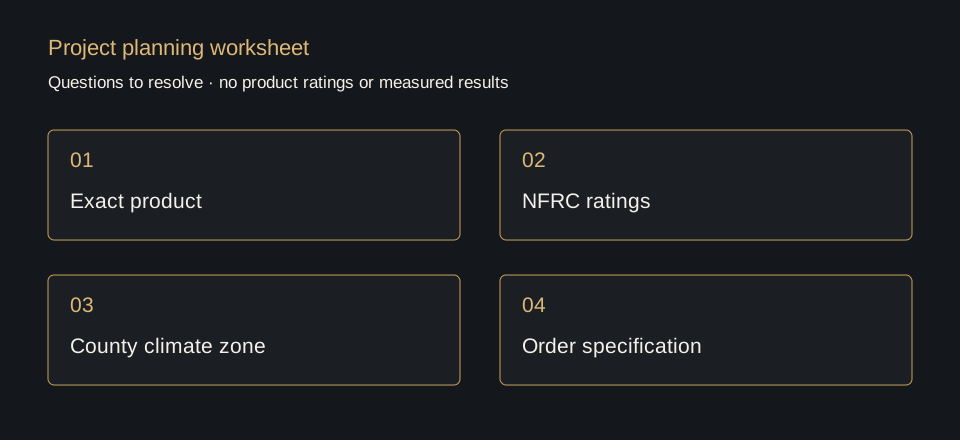
Write down the manufacturer, product series, operating type, frame material, glass option, and identification information supplied by the installer. Put the label or rating document beside that list. Ask the installer to explain any mismatch before you sign the order.
If the quote says “premium Low-E double pane,” request the actual glass option and ratings. If the estimate changes later, check whether the supporting rating information changed too. A clear paper trail makes the final order easier to review.
NFRC's label verification search accepts product type and rating information, with optional manufacturer details. Ask your installer to help locate the matching record if the label or product identification is unclear. Do not fill an unknown field with an assumed value.
Check the ENERGY STAR climate-zone label
ENERGY STAR certification and an NFRC rating serve different purposes. The rating provides comparison information; the certification identifies products that meet ENERGY STAR requirements. ENERGY STAR's buying guidance advises checking the label for your climate zone. Its climate-zone finder uses state and county.
Confirm the county for the property rather than choosing from a broad “Midwest” description. Ask which current certification applies to the exact quoted product. This guide does not establish eligibility for a rebate, tax credit, permit, or local code requirement.
Compare rooms as well as products
Make a row for each room. Record the direction the opening faces, noticeable afternoon heat or glare, shading you intend to keep, and whether daylight is a priority. Bring that information to the estimate appointment instead of choosing the same upgrade for every opening by default.
For example, a west-facing room with uncomfortable afternoon sun and a shaded room where you want more daylight give the installer different questions to answer. Ask them to explain their recommendation for each. This is a planning scenario, not a measured result or a prescription for a particular SHGC.
Our U-factor guide and SHGC guide explain the individual terms. The label worksheet brings them into one purchasing decision.
A comparison exercise without invented performance claims
Imagine two bids with different glass packages. Label them Option A and Option B. Record each supplied U-factor, SHGC, VT, and any air-leakage information. Then add price, installation scope, and warranty references. Leave missing numbers blank and ask for them.
Do not average unlike metrics into a made-up “best window” score. Decide which differences answer the room's problem and ask the installer to explain the tradeoffs. If the answer rests only on a marketing tier, return to the actual specification.
Keep the specification through installation
Before ordering, save the approved product description and rating document with the quote. Ask how the installer verifies delivered units against the order and which identification records you should retain. Discuss any proposed substitution before accepting it.
Read our energy-efficient window planning guide for the wider decision. To discuss your openings, request an estimate from a local professional and include the rooms where comfort or daylight matters most. Indy Windows & Doors provides estimate matching, not product certification or installation.
Save the planning worksheet
For each option: room; orientation; shading; current problem; manufacturer; series; operating style; frame; glass; rating record; U-factor; SHGC; VT; available air-leakage information; ENERGY STAR label for county; price; scope; warranty; substitution policy. Blank means unknown: ask before ordering.
Sources and editorial note
- National Fenestration Rating Council explains the label's ratings
- label verification search
- buying guidance
- climate-zone finder
Prepared by Indy Windows & Doors using the references above. This is an editorial planning guide, not a report of an installation we performed. Product documents, contractor advice, and property-specific requirements determine the final decision.