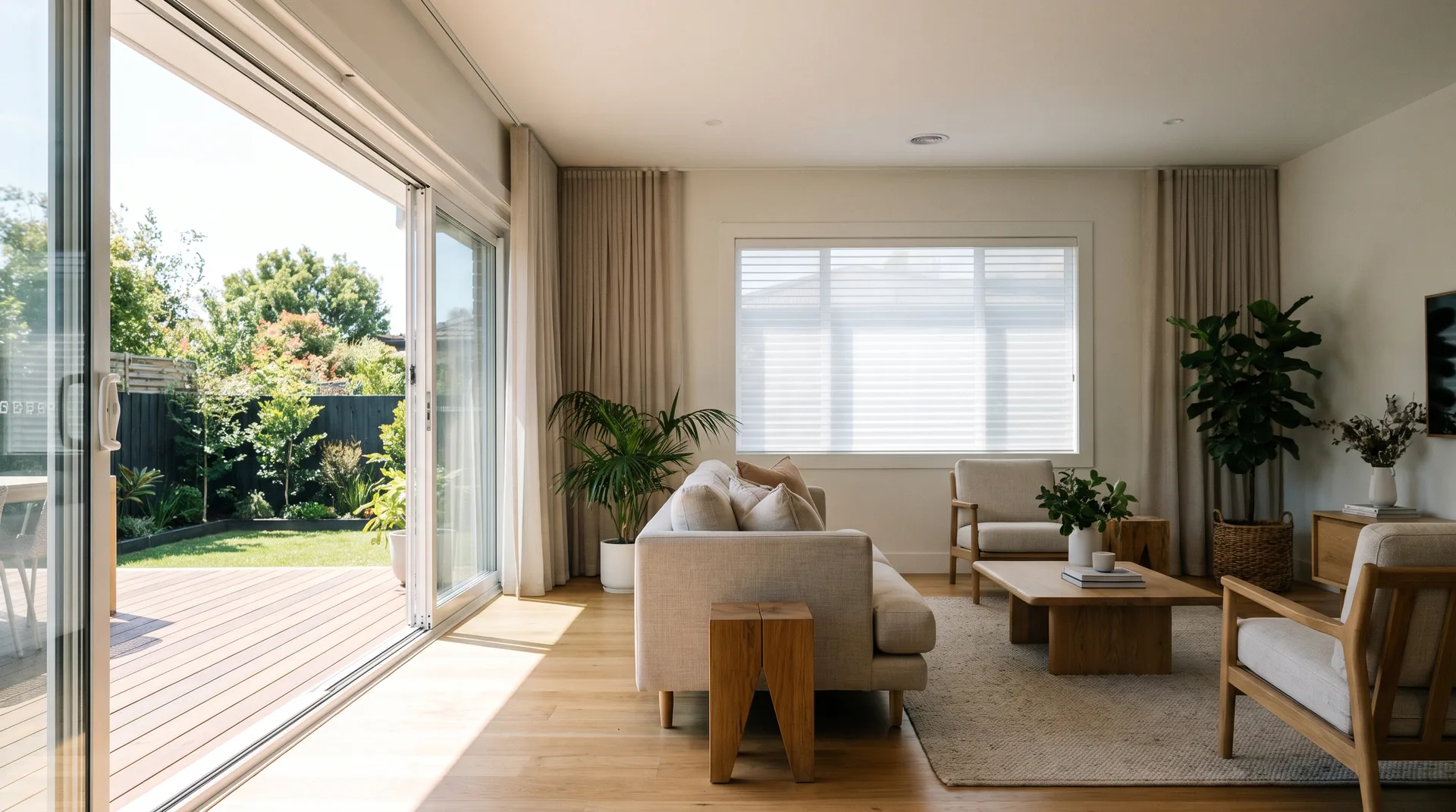
Sliding vs. French patio doors: which fits your Indiana home?
Compare the two most common patio-door layouts by usable space, airflow, sealing, maintenance, and the opening you already have.
Sliding and French patio doors can both be a good fit for an Indiana home; the better choice depends on the opening, floor space, traffic pattern, ventilation goals, and how you want the door to feel every day. A replacement should be judged as a complete opening—panels, frame, rollers or hinges, sill, weather seals, glass, lock, screen, and installation.
Quick comparison
| Consideration | Sliding patio door | French patio door |
|---|---|---|
| Floor space | Panels move within the frame; useful where swing clearance is tight | Needs clear space for one or two panels to swing |
| Opening feel | Wide, simple path with one active sliding panel | Traditional double-door opening when both panels are active |
| Ventilation | Partial opening with a screen option depending on product | Can open wider but needs swing space |
| Maintenance | Track, rollers, adjustment, and seals | Hinges, latch, alignment, threshold, and seals |
| Existing opening | Often matches a wide sliding layout | May require different framing or finish work |
When a sliding patio door makes sense
Sliding doors are practical where furniture sits close to the opening or a swinging panel would interrupt a walkway. They preserve a broad glass area while keeping the operating panel within the frame, which makes them common for living rooms, kitchens, and decks with limited landing space.
Pay attention to the track and sill. A door that sticks, drags, or leaves a gap may have worn rollers, debris, frame movement, poor adjustment, or a failing seal. Ask whether the quote includes screen hardware, track work, threshold inspection, and water-management details.
When French patio doors make sense
French doors suit homeowners who want a hinged, furniture-like look, a broad opening when both panels are open, or a style that relates to an entry door. Each active panel needs room to swing and latch.
Measure the landing area on both sides. Check furniture, rugs, steps, railings, and the path to the yard. Ask how the inactive panel latches, how the sill handles weather, and how hardware will be adjusted after installation.
Energy performance comes from the whole door
The operating style alone does not determine efficiency. Glass area, Low-E coating, frame material, air leakage, sill, seals, and installation all affect comfort. ENERGY STAR provides climate-zone guidance, while the NFRC label helps compare rated performance where the product is certified.
Ask for the exact product ratings and the installation scope. A replacement door installed into a damaged or out-of-square opening can feel drafty regardless of its marketing tier.
Indiana weather and water management
Patio doors face rain, snow, freeze-thaw cycles, humidity, and summer heat. The sill must shed water, the frame must remain aligned, and the perimeter must be sealed without trapping moisture. Ask how the opening will be protected during removal and how the exterior transition will be finished.
If you see staining, soft flooring, swelling trim, or recurring water near the existing door, request an opening inspection before choosing a style.
Questions to ask before ordering
- Will the new door fit the existing rough opening, or will framing change?
- What is the clear passage width when the active panel is open?
- What glass, frame, air-leakage, U-factor, and SHGC information is available?
- Are the screen, lock, handle, threshold, trim, caulk, and paint included?
- How will the installer address an uneven sill, damaged subfloor, or hidden rot?
- What is covered by the product warranty and what is covered by installation?
Choose around how the room actually works
Mark the swing path with painters tape if you are considering French doors. For a sliding door, check where the active panel will stack and whether furniture blocks the handle or screen. Think about groceries, pets, children, snow on the threshold, and how often you will clean the track or glass.
Use our patio door styles page, then connect the decision to the installation scope. If the existing door is hard to operate but the opening is sound, repair may be worth evaluating first.
Bottom line
Choose sliding when floor space and simple operation are the priority. Choose French when a hinged look and larger open passage justify the swing clearance. In both cases, compare the product label, opening condition, weather management, and installation details before comparing price.
Before you pick a patio door.
Plan the opening, not just the style.
Door stylesPatio door styles
 Doors
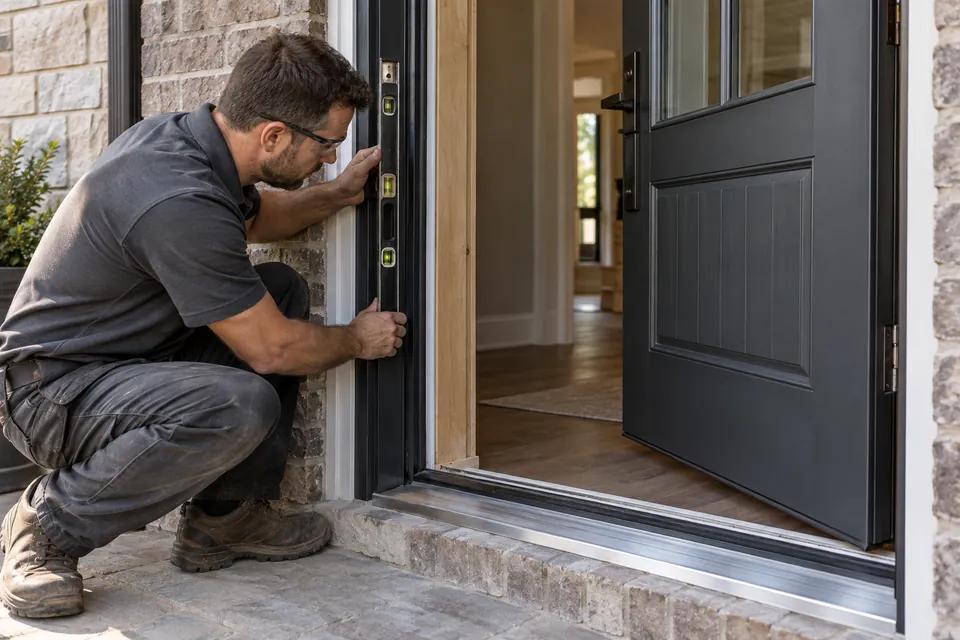
Door installation
 Doors
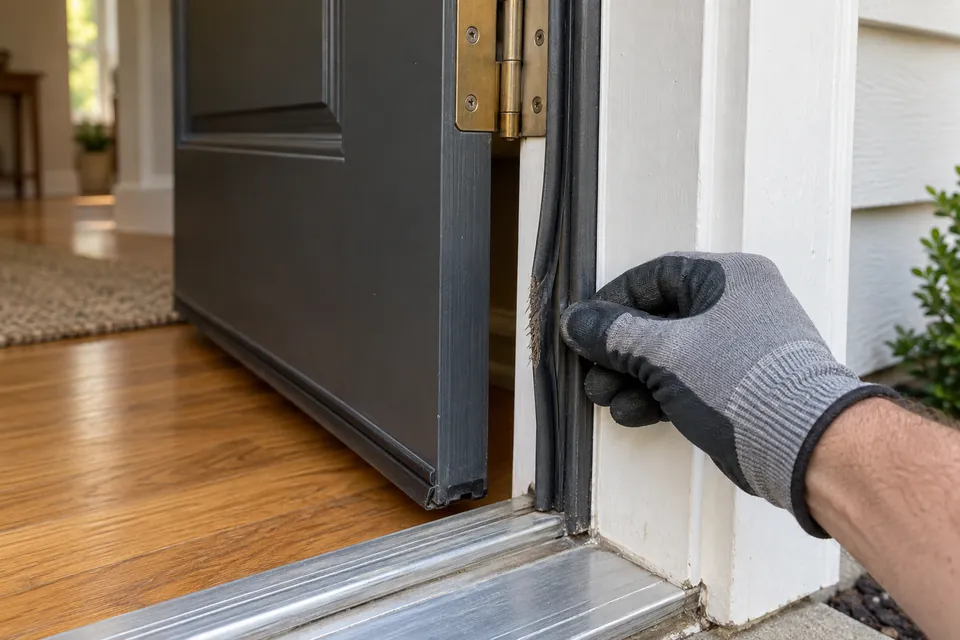
Door repair
 Planning
Window and door replacement guide
Service and design images are illustrative; they do not represent documented local projects.
Find the patio door that fits.
Share the existing opening and the way your room needs to work.