Drafty windows in Indianapolis: when to repair and when to replace.
Find the likely source of the draft, the low-cost checks worth making, and the signs that the opening needs a fuller evaluation.
A draft does not automatically mean you need a new window. In an Indianapolis home, cold air can come through worn weatherstripping, a loose sash, failed caulk, an out-of-square frame, or an unsealed replacement. Repair makes sense when the structure is sound and the faulty part is replaceable. Replacement becomes more likely when the frame, sill, glass unit, or opening has reached the end of its useful life.
Start by finding where the air moves
On a cold or windy day, move your hand slowly around the sash, locks, meeting rail, frame corners, trim, and sill. You are looking for a change in temperature or air movement, not just a cold piece of glass. A narrow tissue strip can make movement easier to see. Do not use an open flame near curtains, finishes, or other combustible materials.
| What you notice | Likely area to inspect | Possible next step |
|---|---|---|
| Air at the meeting rail | Sash alignment, weatherstripping, lock engagement | Adjust or replace operating parts if the frame is sound |
| Air around the perimeter | Trim, exterior seal, installation gap | Inspect caulk, insulation, flashing, and installation |
| Cold glass with no airflow | Single-pane or low-performing glazing | Compare glass-unit or full replacement |
| Soft sill, stains, or swelling | Water intrusion or frame damage | Evaluate moisture and structure before cosmetic work |
Repairs that may be worth trying
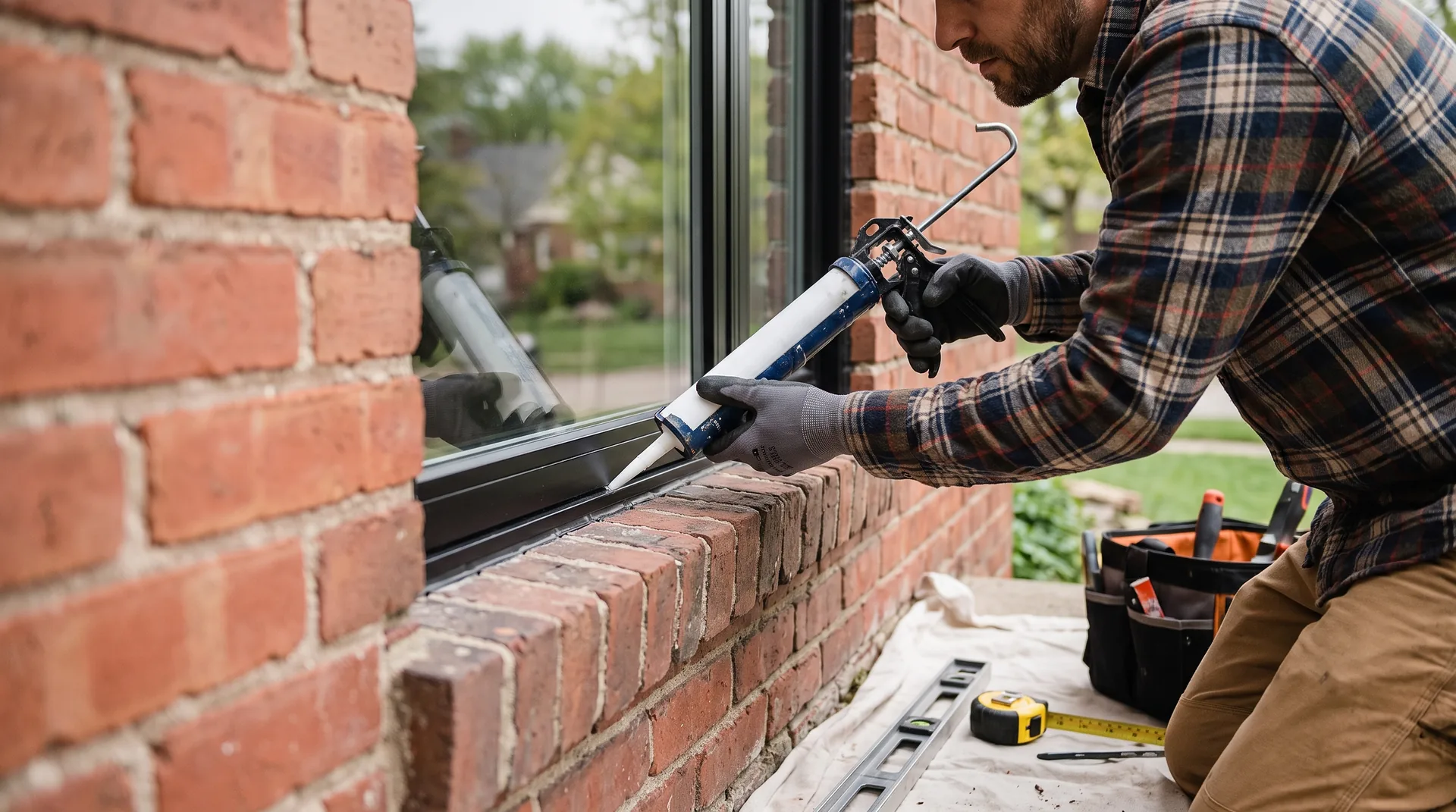
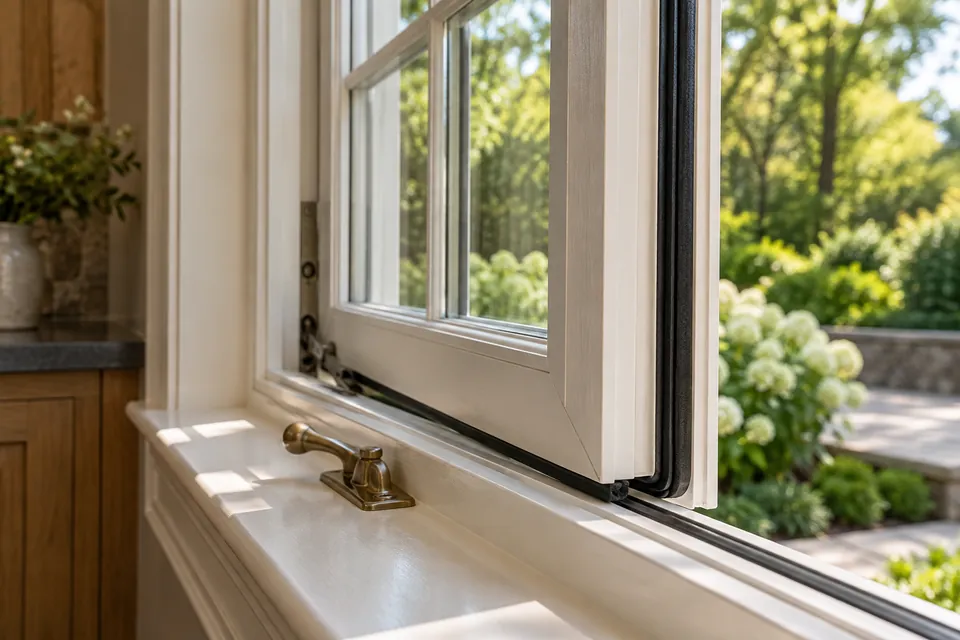
Repair can be sensible when the frame is square, dry, and structurally sound. Common repair scopes include replacing weatherstripping, adjusting a sash, repairing a lock or balance, renewing a small seal, or re-caulking a sound perimeter.
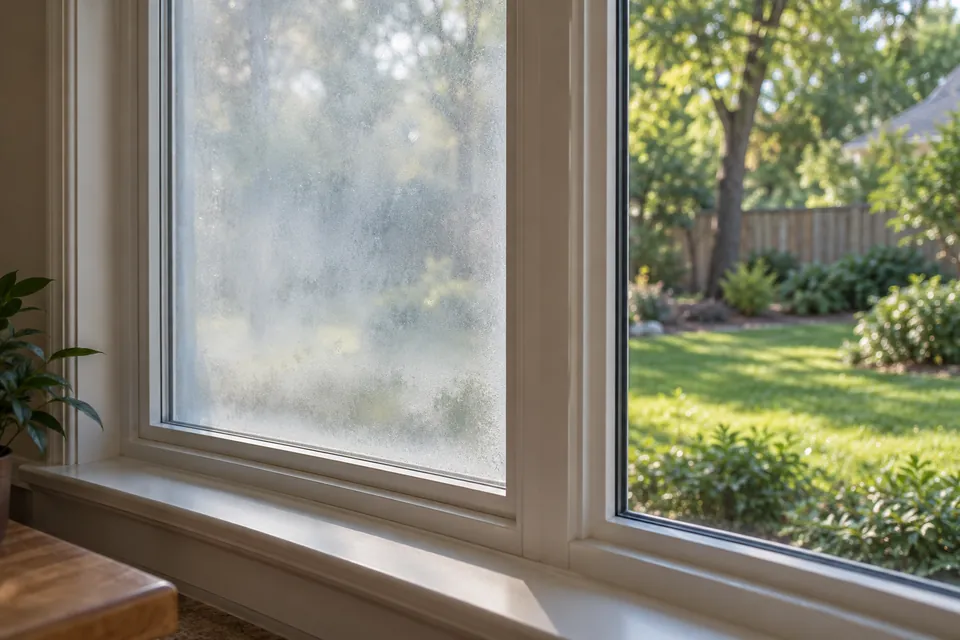
Fog between insulated panes is different. It usually indicates a failed seal in the insulated glass unit. The haze is inside the sealed space, so household glass cleaner cannot solve it. Depending on the design and availability, the fix may be glass-unit replacement or a new window.
Signs replacement is more likely
- The frame is soft, rotted, cracked, warped, or no longer square.
- The sash will not stay in position, close evenly, or lock securely.
- Multiple repairs have not changed the draft or operation.
- Condensation or fog persists between the panes.
- The opening has water staining, damaged trim, or signs of failed flashing.
- The home still has single-pane or badly deteriorated units that make the room uncomfortable.
Use our repair vs. replacement guide for a broader decision framework. The goal is to avoid spending repeatedly on a unit whose frame or glass has failed.
Why caulk is not always the answer
Caulk seals a joint. It does not straighten a frame, restore a failed insulated-glass seal, rebuild a wet sill, or make a loose sash close correctly. If a quote recommends caulk, ask which gap is being sealed, whether the joint is moving, and how the installer will manage water at the exterior.
Interior caulk can hide a symptom while water continues to enter outside. If you see staining, peeling paint, swollen wood, or repeated moisture, ask for the source to be identified before cosmetic work is completed.
Older Indianapolis homes need a closer look
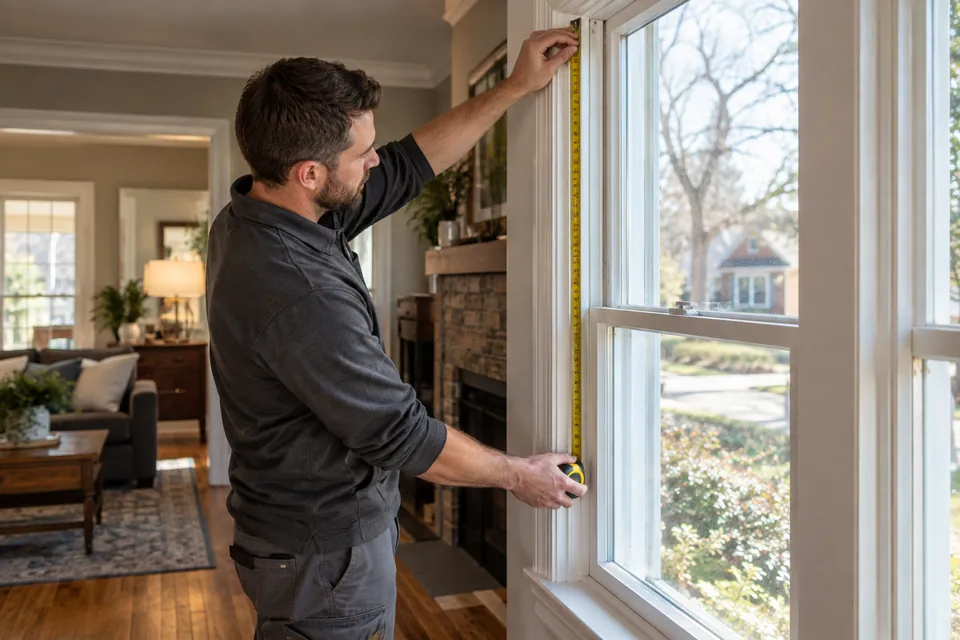
Older homes can have painted-shut sashes, layered trim, settled openings, unusual dimensions, storm windows, and previous repairs. A replacement recommendation should account for the wall, frame, casing, sill, and exterior transition—not just the new unit.
If the opening has historic character or non-standard proportions, ask whether the proposed unit changes the sightline, grille pattern, exterior appearance, or trim.
How to make a repair-or-replace appointment useful
- Photograph the full window and close-ups of the sill, frame corners, trim, and hardware.
- Note when the draft appears: windy days, cold nights, after rain, or only when an exhaust fan runs.
- Record whether the problem is air movement, cold glass, fog, water, noise, or operation.
- Ask for the likely cause, repair option, replacement option, and the evidence for each.
- Request an itemized estimate that separates the window from repair and finish work.
See our guides to window drafts, hard-to-open windows, and foggy glass. If you want to discuss a specific opening, request a free estimate and describe the symptom clearly.
Bottom line
Repair the part that failed when the frame and opening are sound. Replace the unit when the structure, glass, operation, or water management has failed repeatedly or reached the end of its service life.
Before you choose a fix.
Diagnose before you decide.
WindowsRepair vs. replacement
 Troubleshooting
Why windows feel drafty
TroubleshootingFoggy glass
 Windows
Window replacement
Service and design images are illustrative; they do not represent documented local projects.
Get a clear answer for the opening.
Share the symptom and the property ZIP code. Well help you understand the next step.